by William niall morris
courtesy of the Bangkok Post
courtesy of the Bangkok Post
'Wouldn't you just die without Mahler?"
So exclaims Trish, played by the redoubtable Maureen Lipman, in a memorable scene from the 1980s film Educating Rita.
Dressed in flowing bohemian attire, her voice is barely audible above the crashing symphonic music pouring from the house. On the pavement stands Julie Walters as Rita, the gauche outsider, confronting a world of pretentious dinner parties and flamboyant characters whose every remark lands like an epigraph by Oscar Wilde.
The joke, of course, is that Gustav Mahler came to signify a whole aesthetic of cultivated extremity -- metaphysical anguish, neurotic grandeur, emotions swinging violently from the sublime to the catastrophic. Even Alma Mahler, when asked how her husband was, wearily replied: "Gustav is always on the telephone to God."
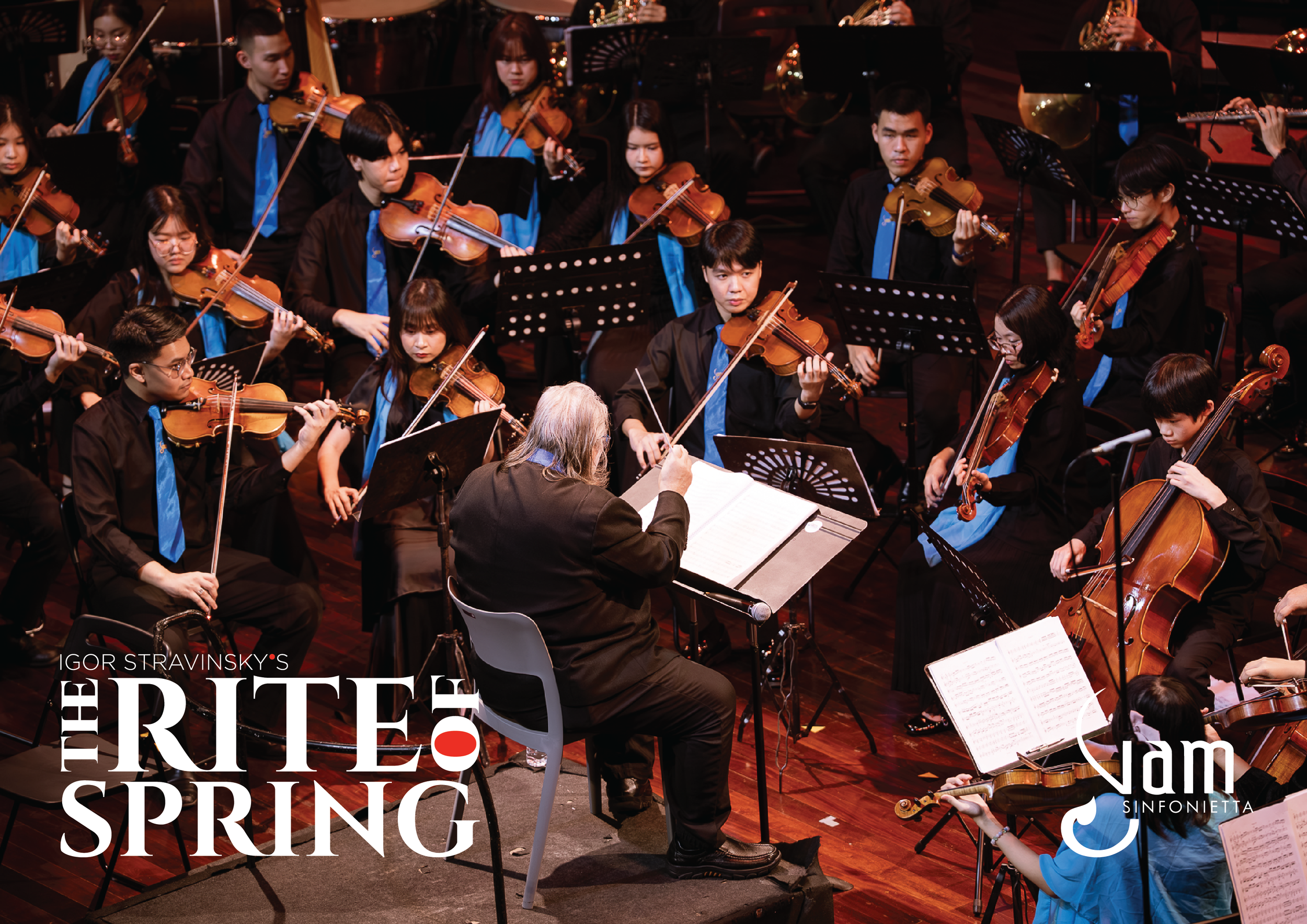
Last month, however, Somtow Sucharitkul led the Siam Sinfonietta in a performance of the Fourth Symphony, stripped of all such self-conscious affectation.
For a start, none of the players were even born when Rita was trying to decipher Mahler's emotional turbulence. Combining fearlessness with a winning insouciance, the Sinfonietta played with the exhilaration of discovery, throwing itself into this high-octane music with youthful abandon. Unlike Trish, they do not treat Mahler as a matter of life and death. They approach the score without baggage and it is that uncomplicated honesty which allows the music to glow.
Much of this energy comes from Somtow's inspirational leadership. He knows this music like the back of his hand and sees it as his mission to induct these players into the expressive world of late Romanticism. Unlike many conductors, he does not rule with a baton of iron. He cajoles, provokes, explains and entertains. As a teacher, composer, conductor and writer, he increasingly strikes me as Thailand's answer to Leonard Bernstein.
Premiered in 1901, with Mahler conducting, the Fourth is smaller in scale than its giant siblings, with a reduced brass section and an almost classical transparency. The first movement was played with buoyancy and refinement, at moments recalling Mozart, with each section of the orchestra enjoying its moment in the sun.
The second movement was inspired by the
painting
Self-Portrait With Death Playing The Fiddle by Arnold Böcklin, where a skeleton eerily plays a violin into the artist's ear.
Here, the solo part was brilliantly delivered by the young concertmaster Bhakasak Jaowanaridhi, alternating between two violins, one tuned a tone higher, lending the music its uncanny edge. He also led throughout with remarkable authority.
The slow third movement forms the emotional heart of the symphony, unfolding in long, visionary paragraphs that undoubtedly led to the golden age of Hollywood film music decades later. There was outstanding playing from the cello section, with a specially poised solo from Pimchanok Ketmee.
While the dry acoustics of the Great Hall at King's College in Bangkok slightly denied the violins some of that iridescent shimmer, the lower strings compensated with warm, dark sonority -- the double basses especially impressive.
Soprano prodigy Punnika Maheumuang. photo:
The final movement is built around Das Himmlische Leben (The Heavenly Life), drawn from the folk poems of Des Knaben Wunderhorn in which heaven appears through the naive eyes of a child. To capture that innocence, Somtow made the bold decision to cast a genuinely young soprano.
Punnika Maheumuang, just 14, braved the challenging acoustics and wisely resisted pushing her voice, even over a full orchestra. That alone shows musical intelligence way beyond her years.
Singing in flawless German with immaculate pitch control, she impressed not only through angelic top notes but with an unusually sonorous lower register. If at moments the voice was lighter than the movement ideally requires, her youthful radiance more than compensated. A true prodigy of Thailand, I am sure she is destined for a remarkable career.
Before the Mahler, the concert opened with a riveting performance of Stravinsky's The Rite Of Spring. Commissioned by Sergei Diaghilev for the Ballets Russes and first staged in Paris in 1913 with revolutionary choreography by the great Nijinsky, its depiction of pagan sacrifice famously provoked riotous scenes in the theatre -- booing, laughter and foot-stomping so loud the dancers struggled to stay in time with the orchestra.
While the music may no longer shock as it once did, it still punches the air with elemental brilliance and the Sinfonietta relished every note. The wind section rose magnificently to the challenge and special mention must go to Supabut Sottatipreedawong, entirely undaunted by the famously exposed opening bassoon solo.
Somtow remarked that this notoriously difficult masterpiece is performed in Thailand only every 12 years or so. He dedicated the concert to the memory of the National Artist Col Choochart Pitaksakorn, who passed away last November. As a violinist and conductor, he worked alongside Yehudi Menuhin and Bruno Walter and received a prestigious Golden Record Award from His Majesty the King.
As Somtow explained: "Dr Choochart was the first to introduce Mahler and Stravinsky to audiences in Thailand. He gave the Thai premiere of both this evening's works and it is because he opened these doors that I have been able to achieve the repertoire revolution.
Rest assured that, as long as Maestro Somtow continues to carry forward that baton, none of us need worry about dying without Mahler.
Please credit and share this article with others using this link: https://www.bangkokpost.com/life/arts-and-entertainment/3248212/youthful-grandeur. View our policies at http://goo.gl/9HgTd and http://goo.gl/ou6Ip. © Bangkok Post PCL. All rights reserved.